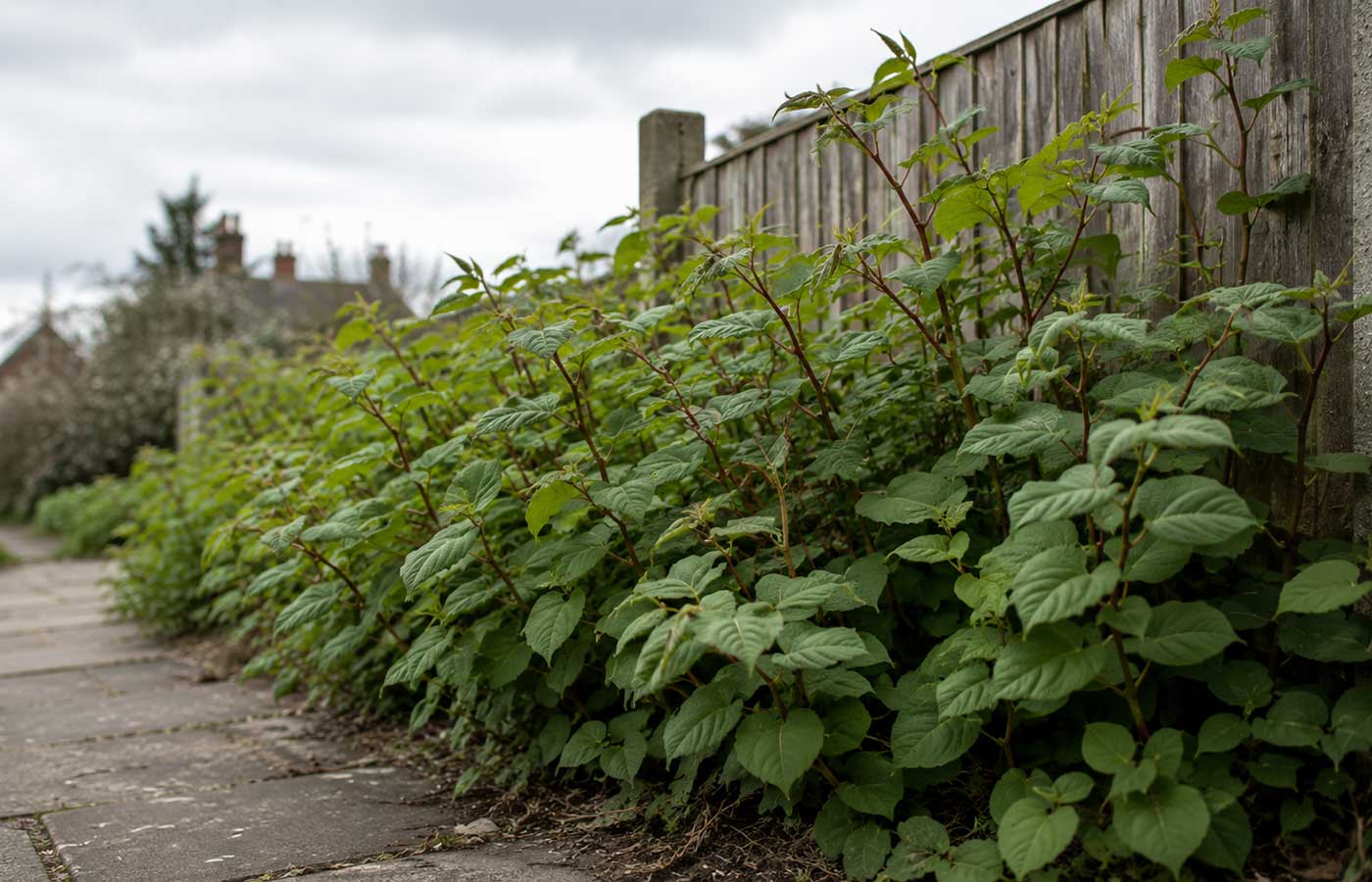
Japanese knotweed often becomes an issue during property sales
Many people first hear about Japanese knotweed while buying, selling or remortgaging a property.
A surveyor may notice suspicious vegetation during an inspection, or a buyer may become concerned after spotting unusual growth near a boundary, driveway or garden wall.
Even uncertainty over whether a plant is actually knotweed can sometimes create delays and additional questions during the mortgage process.
Why lenders pay attention to knotweed
Mortgage lenders are mainly concerned with anything that could potentially affect the value or future saleability of a property.
Because Japanese knotweed is associated with spreading underground growth and ongoing management concerns, it sometimes becomes part of the lender’s risk assessment.
Particular attention is often given when suspicious plants appear close to:
- The main house
- Garden structures
- Boundary walls
- Paving or driveways
- Neighbouring land
The location and extent of the growth often influence how seriously concerns are viewed.
Many concerns begin during the property survey
In many cases, the issue first appears when a surveyor identifies vegetation that resembles Japanese knotweed.
This does not automatically mean knotweed is definitely present.
Several ordinary UK plants can resemble knotweed at different times of year, including bamboo, dogwood and fast-growing seasonal shoots.
Even so, suspicious growth is often flagged so that further investigation can take place if necessary.
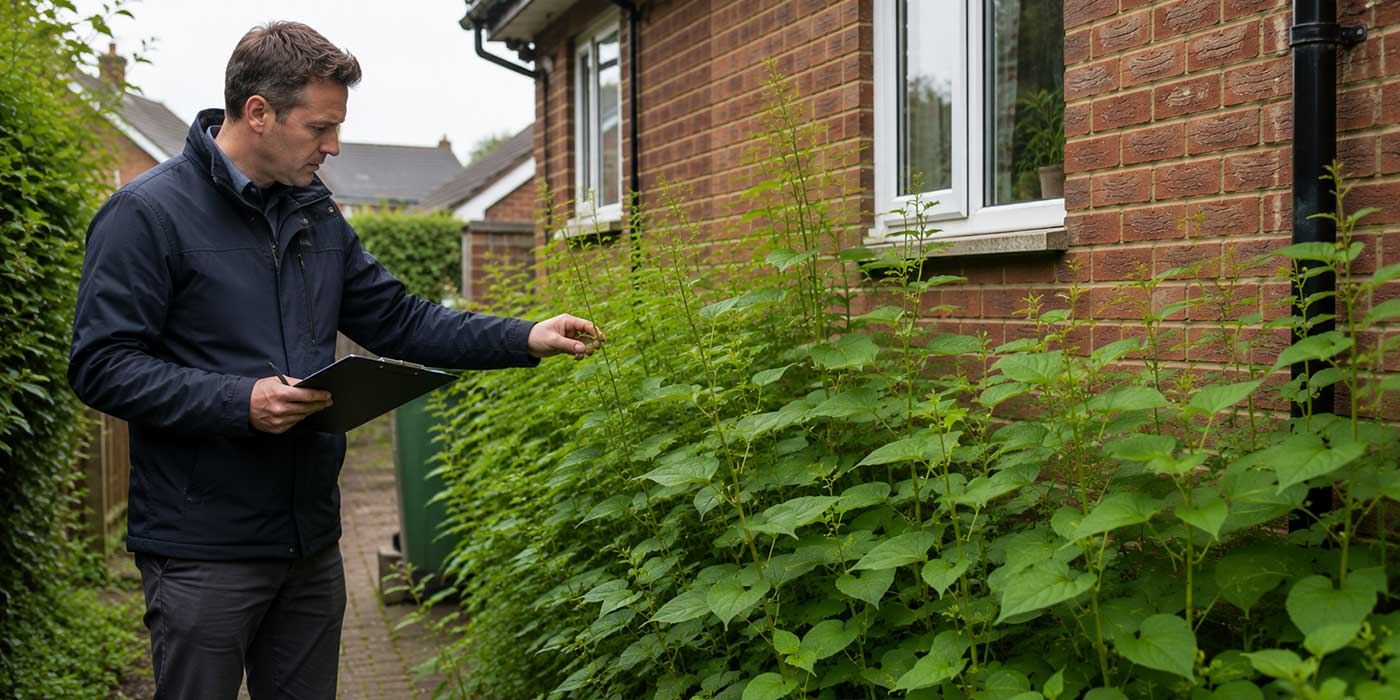
Mortgage applications can sometimes be delayed
If knotweed concerns arise during the application process, additional checks may sometimes follow before a mortgage decision is finalised.
This can occasionally lead to:
- Requests for further identification
- Specialist inspections
- Questions about management plans
- Delays in the transaction
- Further valuation reviews
In many situations, the uncertainty surrounding the plant causes more difficulty than the visible growth itself.
The time of year can affect what surveyors see
Japanese knotweed changes appearance significantly through the seasons.
During summer, dense leafy growth is usually much easier to notice.
In winter, the visible growth may have died back almost completely, leaving only dry hollow canes or hidden ground growth behind.
Spring can also create confusion because many ordinary plants produce reddish shoots similar to young knotweed.
Because of these seasonal differences, identification is not always straightforward from a brief inspection alone.
Buyers often become anxious after online searches
Many people researching knotweed and mortgages encounter alarming headlines and dramatic claims online.
This can quickly increase anxiety during what is already a stressful property transaction.
In reality, many suspicious plants eventually turn out not to be Japanese knotweed at all.
Careful identification and clear information are usually more useful than assumptions based on internet photographs alone.
Neighbouring properties can sometimes become relevant
Surveyors and buyers may also notice suspicious growth on adjoining land or neighbouring boundaries.
This can raise questions where vegetation appears:
- Close to shared fences
- Near extensions or garages
- Along access routes
- Beside retaining walls
In some situations, the concern relates as much to nearby growth as the property itself.
Not every suspicious plant affects a mortgage
A large number of knotweed concerns eventually involve ordinary garden plants rather than confirmed Japanese knotweed.
Fast-growing vegetation near a house does not automatically create a mortgage problem.
The overall growth pattern, stem structure, leaf shape and surrounding location usually matter more than one isolated feature alone.
Photographs are often used during initial identification
People commonly take photographs of suspicious growth before seeking further advice or clarification.
Useful images usually include:
- The full area of growth
- Leaves and stems together
- The distance from buildings
- Nearby paving or boundaries
- Young shoots or flowers
- The wider garden area
Whole-plant photographs in natural daylight normally provide the clearest information.
Sellers often discover concerns unexpectedly
Some homeowners only become aware of possible knotweed concerns after placing their property on the market.
A plant that previously attracted little attention may suddenly become important once surveyors, buyers and mortgage lenders become involved.
This is one reason why many people choose to investigate suspicious growth before a sale progresses too far.
Clear identification is usually the starting point
Whether concerns arise during a mortgage application, valuation or survey, the first step is usually understanding whether the plant is actually Japanese knotweed.
Many situations become much clearer once the growth has been properly identified and compared with common lookalike plants.
Because knotweed changes appearance through the seasons, looking at the whole plant rather than one isolated photograph is usually important.
Related pages
Does the plant look suspicious?
If you are uncertain, you can send photographs for an initial review.