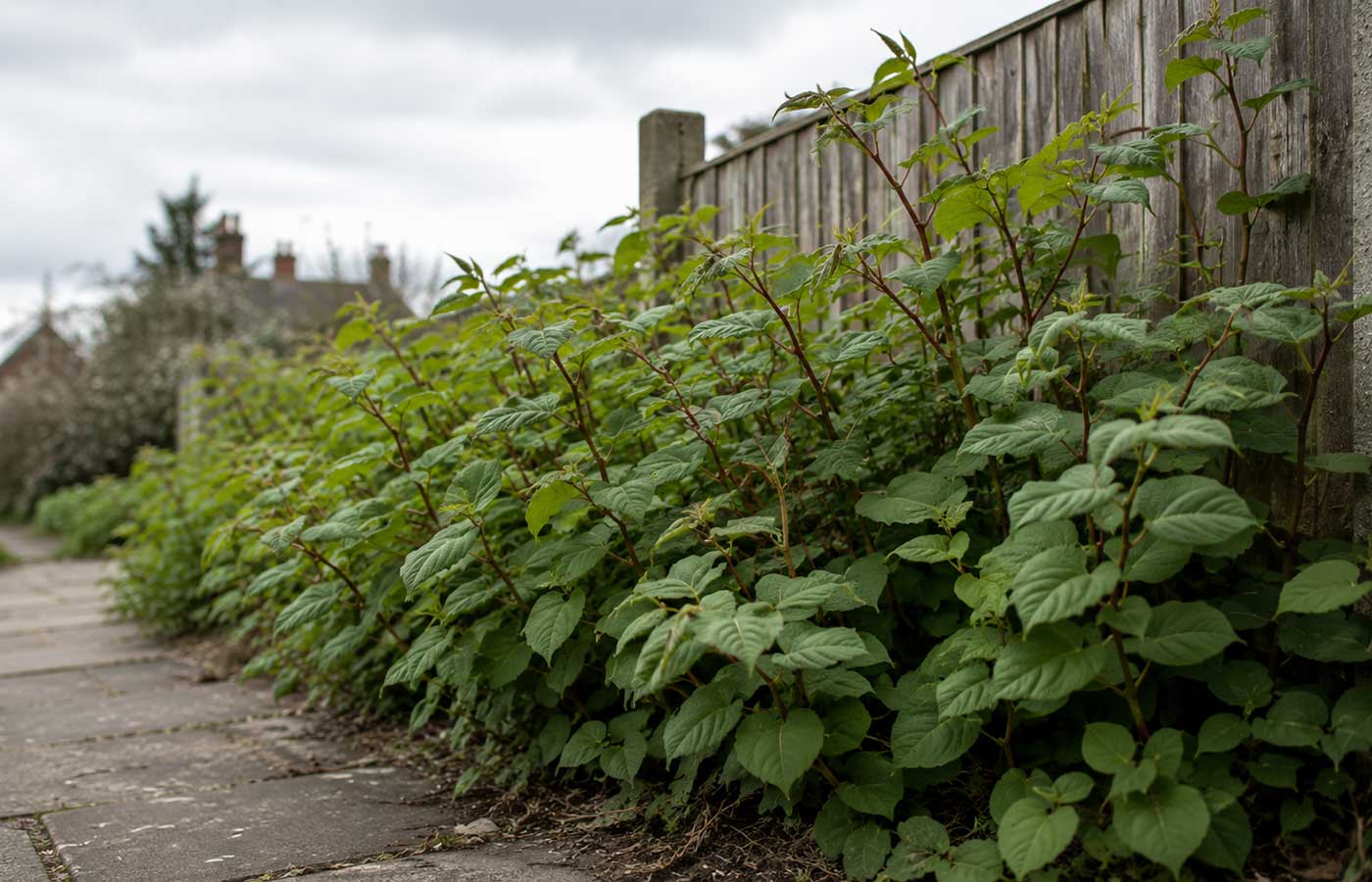
Photographs can often help identify suspicious plants
Many plants are mistaken for Japanese knotweed. Clear photographs can often help narrow down whether a plant appears suspicious or is more likely to be something else.
What photographs should you send?
The most useful images usually include:
- The full plant
- Leaves and stems together
- The surrounding area
- Any nearby paving or structures
- Young shoots or flowers if present
Natural daylight photographs are usually easiest to compare.
Avoid very close-up images only
Close-up photographs can help, but wider pictures showing the whole plant are usually more useful for identification.
A mixture of wide and detailed images often works best.
Upload your photographs below
Use the form below to send photographs of suspicious plants for a free initial review.
How to upload several photographs
You can usually select more than one image at the same time when uploading photographs.
- Windows desktop or laptop: Hold down the Ctrl key while clicking each photograph you want to upload.
- Apple Mac: Hold down the Command (⌘) key while selecting photographs.
- iPhone or iPad: Tap multiple photographs in your gallery before pressing “Add” or “Done”.
- Android phones and tablets: Press and hold one photograph, then tap any additional images you want to include.
Wide photographs showing the whole area are usually the most useful.
Send a Photo for Identification
Not sure whether the plant is Japanese knotweed? Send us a clear photograph and we will take a look. It's free!